Garden Maintenance in Barking

Garden maintenance in Barking needs a practical, regular approach that keeps outdoor spaces tidy, healthy and ready to use through the changing seasons. Our service focuses on the routine work that prevents overgrowth, keeps lawns manageable and helps planting beds, paths and boundaries stay in good order. Whether you need a one-off tidy-up or an ongoing maintenance schedule, the aim is to keep the space looking cared for without unnecessary disruption.
We handle the everyday tasks that make the biggest difference to presentation and plant health, including lawn mowing, hedge trimming, border care and light clearing. Where a garden has become busy or uneven, we can bring the main areas back under control and set a sensible routine for upkeep. Good maintenance is usually about consistency, so the work is planned around what the garden actually needs rather than forcing a fixed package onto every site.
If you are comparing options, start by thinking about the parts of the garden that need the most attention and the level of finish you want to maintain. You can then decide whether the right solution is a single visit, a seasonal reset or a regular visit pattern. For a straightforward quote, get in touch with our team and outline the work you would like carried out.
Routine Lawn Care and Border Maintenance
Healthy-looking gardens usually depend on routine work being done at the right time. Our maintenance service can include mowing, edging and general tidying so that grass, borders and pathways remain visually balanced. When lawns are cut consistently, they are easier to manage and less likely to dominate the rest of the garden. That is especially useful where beds, shrubs and paved areas share the same limited outdoor space.
Border maintenance can involve removing dead growth, keeping weeds from spreading and cutting back soft growth that starts to spill into walks or lawns. We work with the existing layout of the garden, so the intention is not to alter everything, but to make the current space neater and more workable. If you are preparing for family use, guests or simply a more pleasant everyday view, this type of upkeep can make the garden feel much more orderly.
Typical routine tasks can include:
- grass cutting and neat edging
- deadheading and light pruning of suitable growth
- weed control in paths and borders
- clearing leaves, twigs and small clippings
Hedge Trimming and Shape Control

Hedges can quickly affect how a garden feels, both from inside and from the street. Our hedge trimming work is designed to restore shape, keep growth within sensible limits and improve light and access around the rest of the garden. We trim with attention to the hedge’s natural form, because a clean line usually looks better than an over-cut result. Where hedges are part of a boundary, the work can also help preserve a tidier edge between neighbouring spaces.
There are different reasons to trim hedges, and the approach should reflect the species, height and condition of the plant. Some hedges need gentle regular cutting, while others benefit from a fuller reduction back to a sensible profile. We also consider whether the hedge is part of a formal layout or simply a screening feature that should stay practical rather than decorative. Careful trimming helps the hedge remain manageable while avoiding unnecessary stress on the plant.
When hedge work is combined with wider garden maintenance, it often gives the whole outdoor area a cleaner outline. This is especially useful where overhanging growth is starting to narrow paths or block light to lawn and planting areas. A tidy hedge can make the rest of the work show properly, so it often sits near the top of a maintenance plan when visual impact matters.
Garden Clearance for Overgrown Areas
Some gardens need more than ordinary routine upkeep. Our garden clearance service is aimed at spaces that have become cluttered, overgrown or difficult to use because of accumulated cuttings, dense vegetation or unwanted debris. The work is about restoring access and creating a cleaner starting point, so the garden can be maintained more easily afterwards. It can suit front gardens, rear gardens, side returns and other outdoor spaces with limited access or heavy growth.
Clearance is often a sensible first step before setting up regular maintenance. Once the main obstructions are removed, it becomes much easier to see the actual structure of the garden and decide what should be retained, cut back or removed altogether. That can include cutting back tangled growth, removing waste material and opening up paths or borders that have been hidden by accumulation. It is a practical service for gardens that have simply got too much to manage in one go.
If you are not sure whether you need clearance or lighter maintenance, a good rule is to look at how much of the garden is currently hidden, blocked or unreachable. Where access is restricted, the first visit may need to focus on clear space before other work becomes worthwhile. After that, regular upkeep becomes far simpler and less time-consuming.
Seasonal Care and Planting Area Attention
Seasonal changes affect gardens in different ways, so maintenance should respond to what is actually happening outside rather than follow a rigid checklist. During growth periods, that may mean more frequent mowing, edging and trimming. In quieter months, it may mean leaf clearing, cutting back tired growth and keeping paths and beds free from accumulated debris. The aim is to keep the garden presentable while supporting the condition of the plants already in place.
Planting areas often benefit from light, careful attention rather than heavy intervention. We can help remove unwanted growth around shrubs, maintain a neater edge around beds and keep self-set weeds from taking over. Where useful, small adjustments to the routine can make a big difference to how the garden holds together across the year. Consistent seasonal care is usually better than waiting until the space becomes difficult to manage.
Good seasonal maintenance is not only about appearance. It can also reduce the amount of work required later by preventing dead growth, encroaching weeds and awkward build-up from becoming established. If you prefer a garden that stays usable and tidy through changing weather, a planned maintenance rhythm is often the most efficient way to achieve that.
Access, Waste and Preparing for a Visit
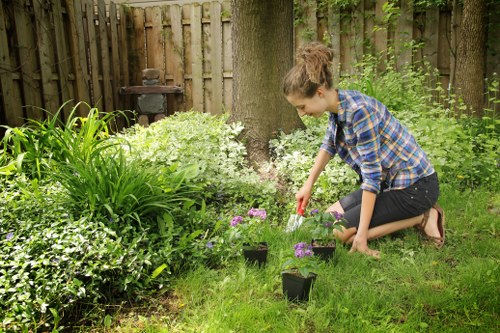
When arranging garden maintenance, a few practical details help the work run smoothly. It is useful to identify which parts of the garden matter most, whether there are any access limits and whether there is anything delicate that needs to be avoided. If you can describe the main areas that need attention, we can focus the work where it will have the greatest effect. That makes it easier to plan a sensible amount of time for the visit and avoid unnecessary work.
It also helps if any loose items, toys, tools or temporary obstacles are moved clear before the visit, particularly where lawns, borders or narrow side paths need to be reached. We can then concentrate on the maintenance itself rather than spending time navigating preventable clutter. If waste needs to be gathered during the job, the method will depend on the amount and type of material involved, as well as what needs to be left in place.
Where a garden has been neglected for a while, a brief note about the current condition is often enough to begin planning. You do not need to over-explain every detail; a clear description of the main issues is usually more helpful than a long list of minor points. For a quotation, contact us and outline the type of maintenance you need, along with the size and condition of the space.
Understanding the Work and Its Limits
Garden maintenance covers a broad range of routine outdoor tasks, but it works best when expectations are realistic and specific. Some gardens only need a tidy cut and a light reset, while others need repeated attention to regain shape and usability. Our service is designed around the visible condition of the space and the tasks that will genuinely improve it, rather than trying to turn every visit into the same package.
Where the garden contains established shrubs, mature hedges or mixed planting, the work usually needs to be adjusted carefully to the condition of each feature. Some growth can be reduced, some should simply be kept in line, and some may be best left alone until the right time of year. This is one reason maintenance work tends to be most effective when it is planned with the actual garden structure in mind. It should support the space, not fight against it.
If the right answer is a combination of mowing, trimming and tidying, we can build the visit around those needs. If the garden needs a larger reset before it can be kept in order, that can also be discussed. The most useful outcome is a garden that looks deliberate and manageable, with the main features kept under control and the work matching the way the space is used.
About Barking
Barking is a district in east London, part of the London Borough of Barking and Dagenham, with roots as a historic riverside settlement on the River Roding. Its name is linked to early medieval history, and the area developed from a fishing and market town into a larger urban district as London expanded eastward. The town’s long parish history is reflected in Barking Abbey ruins, a major reminder of its early significance as one of the important religious houses in Anglo-Saxon England. Although the abbey itself no longer survives as a complete complex, the site remains a notable historic reference point within the modern townscape. Barking’s built environment mixes older civic and religious landmarks with later residential streets, public housing estates and regenerated commercial areas. The town centre has been reshaped over time, but it still retains the feel of a place with a strong local core rather than a purely commercial district. Barking Town Hall, the Broadway Theatre and the nearby market area contribute to a civic and cultural centre, while Eastbury Manor House offers a striking example of Tudor architecture and later museum use. The River Roding and its surroundings form an important natural and historical edge to the area, connecting the town to the Thames estuary landscape. Barking Park provides open green space close to the centre, with a lake, mature planting and recreational paths that add a different character to the urban fabric. Transport links, including Barking station, have long influenced how the area connects with the wider capital, but the place retains a distinct identity shaped by centuries of settlement, trade and change.
Regular Maintenance Plans for Ongoing Order

Some gardens work best with a regular maintenance pattern rather than occasional large visits. If growth is steady and the layout is already established, repeated upkeep can keep the whole space much more manageable. That may include mowing on a suitable cycle, keeping hedges trimmed before they get too large and preventing weeds from settling into paths or borders. The value of regular work is not simply that it looks tidy for a moment, but that it stops problems from building up between visits.
We can tailor maintenance to the features that matter most in your garden. In one space, the priority may be the lawn and boundary hedges; in another, it may be keeping planted areas neat and preventing access routes from becoming messy. A sensible plan keeps attention on the most visible and most vulnerable parts of the garden first. Regular care also tends to make each visit more efficient, because the work can stay focused on maintenance rather than major recovery.
When you are ready to arrange ongoing care, it helps to think about what would make the biggest difference each time we visit. You can then ask for a quotation that reflects the actual work involved rather than a generic description. If you only need one-off help to reset the garden, that can be discussed in the same way.
Landscape Gardening and Larger Outdoor Changes
Alongside maintenance, some gardens also benefit from more deliberate improvement work. Our landscape gardening and landscaping pages cover broader changes to the structure and use of outdoor spaces, from reshaping areas to introducing new materials or planting arrangements. Where maintenance alone is no longer enough, these services can help you move from a difficult layout to one that is easier to keep in order and more satisfying to use.
Larger work can be useful when a garden has awkward sections, poor flow or features that no longer suit how the space is used. The right solution may involve rethinking parts of the layout, improving the balance between hard surfaces and planted areas or creating clearer boundaries between activity and display. If you are considering a bigger change, it is worth understanding how that work relates to ongoing maintenance, because a well-designed space is usually simpler to maintain over time.
Not every garden needs major change, and we would not suggest it where routine work is sufficient. But when you do want to improve both appearance and practicality, it can be helpful to look at maintenance and landscape work together. That way the final result is not just tidy for a week, but structured in a way that supports longer-term care.
Final Steps for a Clear Quote

A clear quotation is usually easiest when the main tasks are described in straightforward terms. Let us know whether you need lawn mowing, hedge trimming, clearance or a broader maintenance visit, and mention anything that may affect the work such as restricted access, uneven ground or heavy growth. A few accurate details are more useful than a long explanation, especially where the garden has several areas that need different types of attention.
If you are unsure how to describe the job, focus on the outcome you want. For example, you may want the garden brought back to a tidy state, kept under control on a regular basis or prepared for a larger change later on. We can then shape the work around that aim and make the quotation reflect the tasks involved. For the next step, request a quotation and tell us what your garden needs.
Our goal is to make garden maintenance in Barking straightforward, practical and easy to plan. Whether the job is routine or more involved, a sensible quote starts with the right information and ends with work that suits the space. When you are ready, get in touch and ask for a quote.